
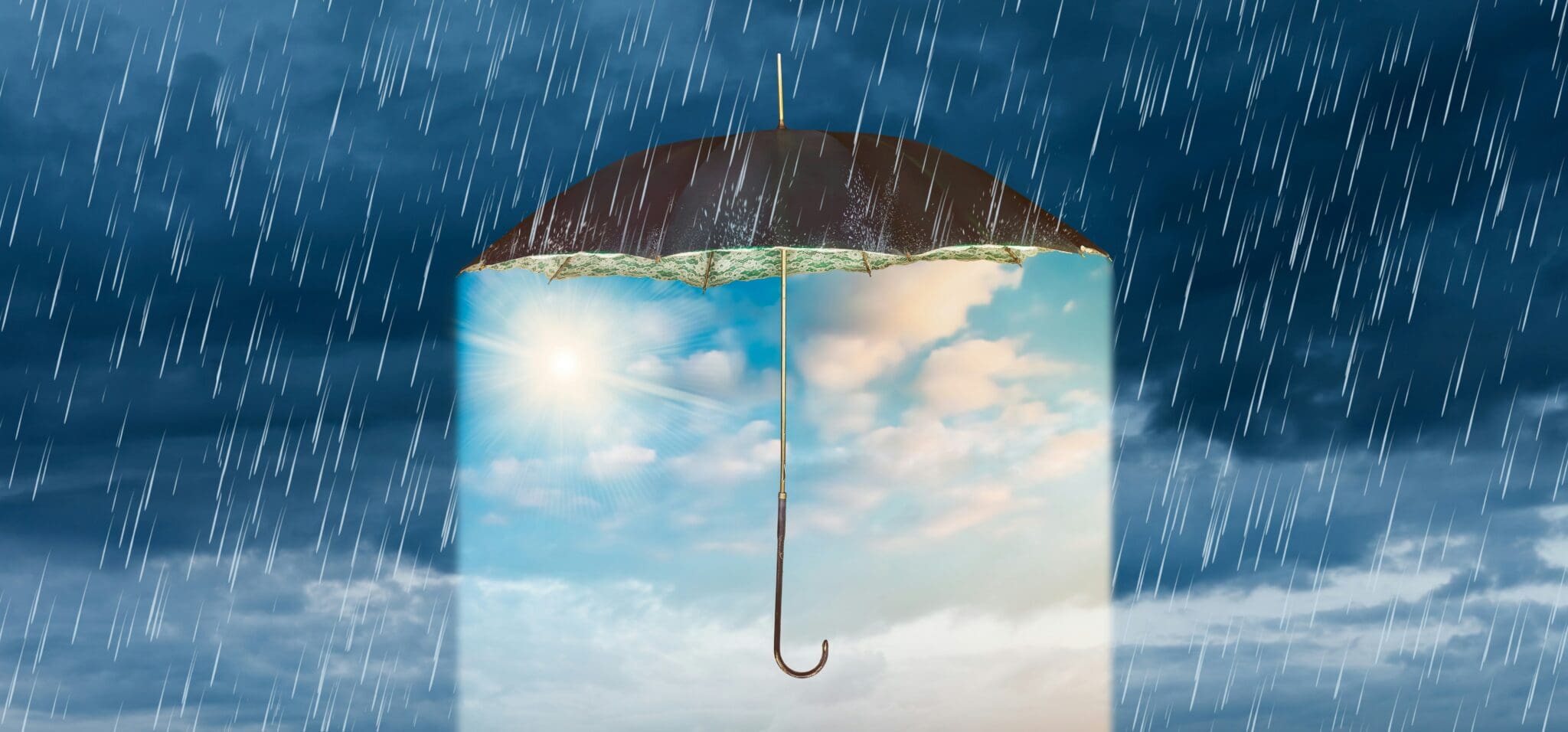
Most people think of insurance as protection for their home, car, and belongings. But what happens if you are responsible for an accident that causes serious injuries or significant property damage—and the liability coverage on your home or auto insurance isn’t enough to cover the claim?
That’s where umbrella insurance can help.
What Is Umbrella Insurance?
Your auto and home or renters insurance protects you against many liability exposures, but only up to a certain limit. If a covered claim exceeds that limit, you could be personally responsible for the amount that isn’t covered by insurance.
That means your assets could be exposed, including savings, investments, property, and other assets, depending on the circumstances and applicable law. Your future income may also be at risk in some situations.
You never want to run out of liability coverage. An umbrella insurance policy provides an additional layer of protection, making it less likely that a serious claim will exceed the amount of insurance available to protect you.
Why Would Someone Need Umbrella Insurance?
Here are the main circumstances where an umbrella policy could provide additional liability protection.
- Serious auto accident: You cause an accident and the injured party’s medical expenses, lost wages, pain and suffering, and other damages exceed your auto liability limit.
- Serious injury at your home: A guest, visitor, or other person is injured on your property.
- Dog bite or animal-related injury: Your dog injures someone.
- Pool or trampoline accident: Someone is seriously injured while using your pool, trampoline, or another potentially hazardous feature of your property.
- Playing recreational sports: You accidentally injure another player during a covered recreational activity.
- Personal injury lawsuit: A covered incident results in a lawsuit involving certain personal injury allegations, such as libel, slander, or defamation.
What Assets Could Be Exposed?
One of the biggest reasons people consider umbrella insurance is to help protect the assets they have accumulated over time. Depending on the circumstances, a liability claim that exceeds your insurance coverage could potentially put assets such as these at risk:
- Savings and checking accounts
- Investment accounts
- Equity in your home
- Rental properties
- Future income
The important point is that your financial exposure doesn’t necessarily end when your underlying insurance policy reaches its limit. An umbrella policy can provide another layer of liability protection before a covered claim reaches your personal assets.
How Much Umbrella Insurance Do I Need?
There isn’t one amount of umbrella insurance that is right for everyone, but the fact is that the more coverage you carry, the less likely it is that you will run out of coverage, which is always the goal.
Umbrella policies are commonly available in limits starting at $1 million, with higher limits available.
When determining an appropriate amount of coverage, it can be helpful to consider factors such as:
- The value of your home and other property
- Your savings and investments
- Your household income and future earning potential
- The number of vehicles you own
- Whether you own boats, ATVs, or other recreational vehicles
- Your personal risk tolerance
- Whether you have teenage or inexperienced drivers in your household
- Your overall exposure to personal liability claims
Is Umbrella Insurance Expensive?
One reason many people consider umbrella insurance is that it can provide a relatively large amount of additional liability protection for a comparatively modest premium. The cost varies based on factors such as the amount of coverage, your driving history, the number of vehicles and drivers in your household, the properties you own, and other liability exposures.
Umbrella insurers also generally require you to maintain certain minimum liability limits on your underlying homeowners and auto policies, since higher liability limits on the underlying policies makes it less likely the umbrella will be needed. This is one reason it is important to look at your insurance policies together rather than purchasing an umbrella policy independently.
What Doesn’t Umbrella Insurance Cover?
Umbrella insurance isn’t a replacement for homeowners, renters, or auto insurance. It sits above those policies and generally requires you to maintain specified underlying coverage.
Umbrella policies also have exclusions. Depending on the policy, exclusions can include certain intentional acts, business-related exposures, contractual liabilities, and other situations that aren’t covered under the umbrella policy. This is why it’s important to review the actual policy language with your insurance professional rather than assuming an umbrella policy covers every type of lawsuit or liability claim.
What About Underinsured Motorist Coverage?
Umbrella insurance can also provide an additional layer of protection in some situations involving underinsured or uninsured motorists.
For example, suppose you are seriously injured or disabled in an accident caused by another driver. The other driver’s auto insurance may provide only a limited amount of liability coverage, or none at all if that driver was uninsured. If your injuries result in substantial medical expenses, lost wages, pain and suffering, and other damages, the other driver’s insurance may not be enough to fully compensate you.
The underinsured motorist (UM) coverage under your auto insurance policy may provide protection in this situation. Some umbrella policies can provide additional coverage above the limits of your underlying auto policy. This can be particularly important because you can be financially exposed even when you did nothing wrong.
When considering an umbrella policy, ask whether it includes uninsured and underinsured motorist coverage and, if so, how much coverage is provided.
Interested In Additional Liability Protection? Contact Chris Elliott Insurance Agency!
Our team can can help you evaluate your individual situation and determine what limits may be appropriate. Rates are usually surprisingly affordable!
Get a Quote